Urban Pigeons Lack Toes Frequently: An Explanation
**Urban Pigeons Suffer from "Stringfoot": Human Activity and Poor Waste Disposal to Blame**
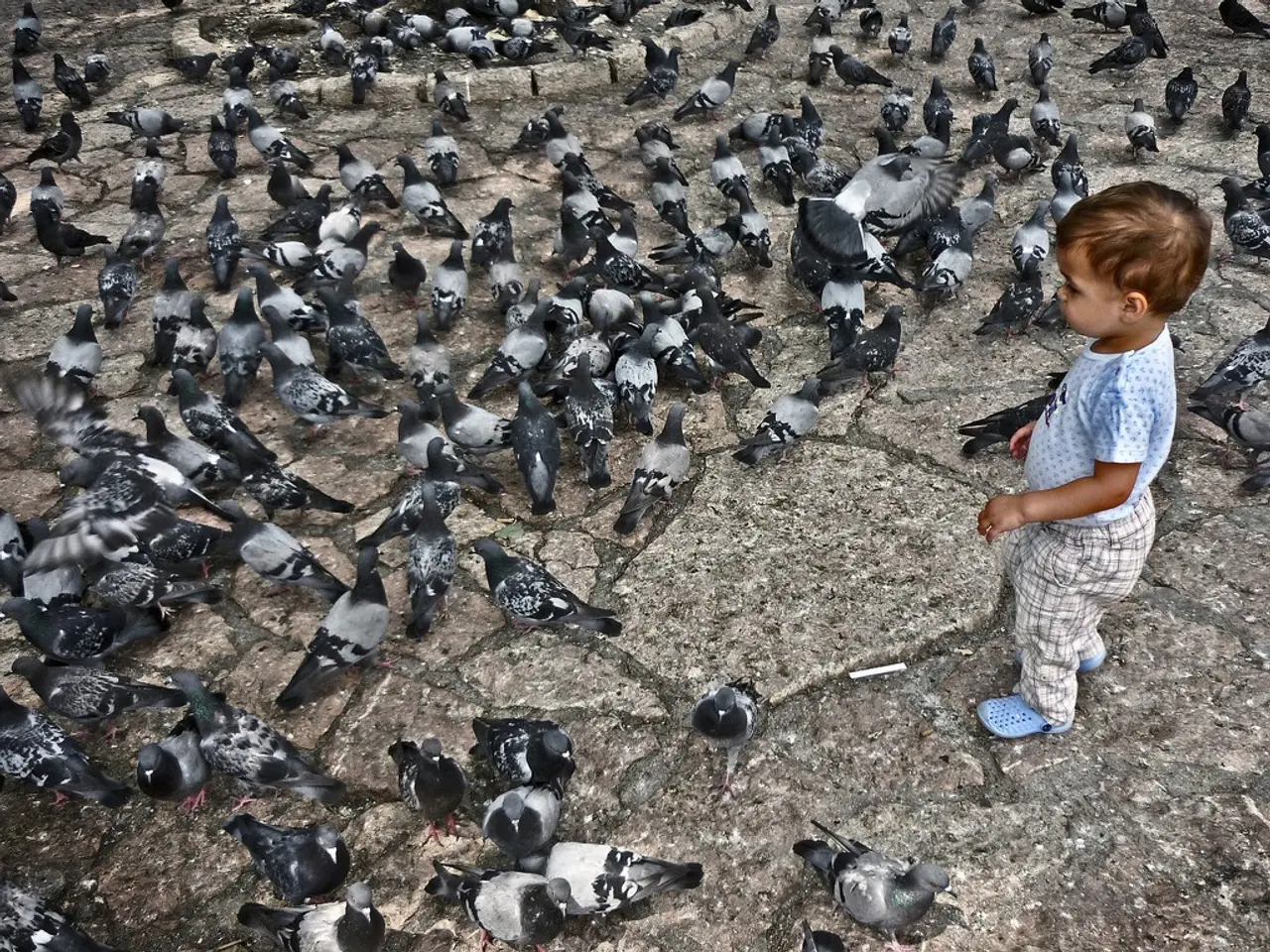
A new study published in Biological Conservation has shed light on a troubling issue affecting urban pigeons - the condition known as "Stringfoot." This condition, caused by thread or string getting wrapped tightly around a pigeon's toes, can lead to injury or even loss of toes.
The study found that high human population density, particularly in densely populated cities, contributes to the problem. With increased litter, such as discarded threads, strings, or other fine debris on streets, pigeons can pick up this material while foraging and inadvertently wrap it around their feet, causing stringfoot.
Urban pollution and waste management problems also indirectly contribute by increasing the accessibility of such harmful litter to city wildlife. The study team categorised 46 sites in Paris based on habitat types such as density of people, foliage, and buildings.
Interestingly, the study suggests that the high number of hairdressers in an area may indirectly contribute to toe mutilation due to the higher human population density. Pigeons in green spaces, on the other hand, tend to have more toes because there are fewer people and less pollution.
The study team found that one out of five adult pigeons in their sample was mutilated, with 30 pigeons exhibiting mutilated toes between April and May 2013. They observed the presence or former presence of strings or human hair caught on pigeon digits, and noted an increase in toe injury with higher density of strings and hairs on the ground.
If a pigeon tries to remove the string or hair, it may tighten it on a toe instead. The team's findings underscore the importance of paying attention to urban wildlife to better understand the environmental conditions we live in.
The condition of missing toes in urban birds, such as crows, is similar to that observed in pigeons. The study found no correlation between foot deformities and disease, and concluded that urban-based pollution, not viruses, is the primary cause of missing toes in urban pigeons.
The study team also debunked the common belief that pigeons are the cause of pollution, instead finding that they are victims of human pollution. Frédéric Jiguet, the study author, recently freed a crow with plastic strings tightened in its toes, highlighting the urgency of addressing this issue.
The study serves as a reminder that our actions have consequences, and that we must pay attention to the health of urban wildlife as an indicator of our own environmental conditions. The One Health concept emphasises that the health of humans, animals, and the environment are interconnected, and this study underscores the importance of this concept in urban settings.
- The study published in Biological Conservation reveals that urban pigeons often suffer from a condition named "Stringfoot," which is linked to strings or threads that humans discard in densely populated cities.
- The study suggest that areas with a high concentration of hairdressers may indirectly contribute to toe mutilation in pigeons because of the associated human population density.
- The study findings show that environmental conditions in urban spaces, such as green spaces, impact the incidence of toe mutilation in pigeons, with fewer people and less pollution leading to fewer cases.
- The study underscores the need to consider the health of urban wildlife as an indication of the environmental conditions we, as humans, are creating, emphasizing the One Health concept's importance in urban settings.